
Fayette Directory Collections by Era
The Lexington Public Library directory collection is the main Fayette County city directory shelf. Its public metadata verifies selected runs, not a complete annual sequence. A blank year in the digital archive does not mean no directory was printed or no resident lived in Lexington.
| Collection | Years | Where Held | Access |
|---|---|---|---|
| Lexington city and gazetteer runs | 1864-65; 1877-78; 1906-07; 1923 | LPL Kentucky Room and digital archives | Open scans and staff help |
| Polk's Lexington and county runs | 1940-41; 1958 | LPL, ContentDM, ResCarta | Digital browse; print holdings vary |
| Telephone directories | 1933, 1944, 1960, 1964, 1966, 1974, 1976, 1977 | LPL digital and Kentucky Room | Subscriber and address clues |
| Rural and farm directories | 1912; 1971 | LPL digital and Kentucky Room | Rural household context |
| Street and subdivision reference | 1956 | LPL and ResCarta | Address-first supplement |
Publishers shift too. R.C. Hellrigle and Company appears in 1877-78 metadata, Lexington Telephone Company in 1933 and 1944, Polk's Lexington in 1940-41, and F.O.P. Directory in 1956 and 1958. The latest verified telephone run is 1977. The final printed city-directory year is not stated.
Fayette City Directory Digital Shelf
Begin online, yet keep the Kentucky Room in the workflow. The catalog record, browse view, and page image answer different questions. Metadata identifies title and date. The scan preserves print order and the key. Search text may help with a name, but it can miss worn type, initials, or short marks.
The digital directory landing page shows the library's collection view.
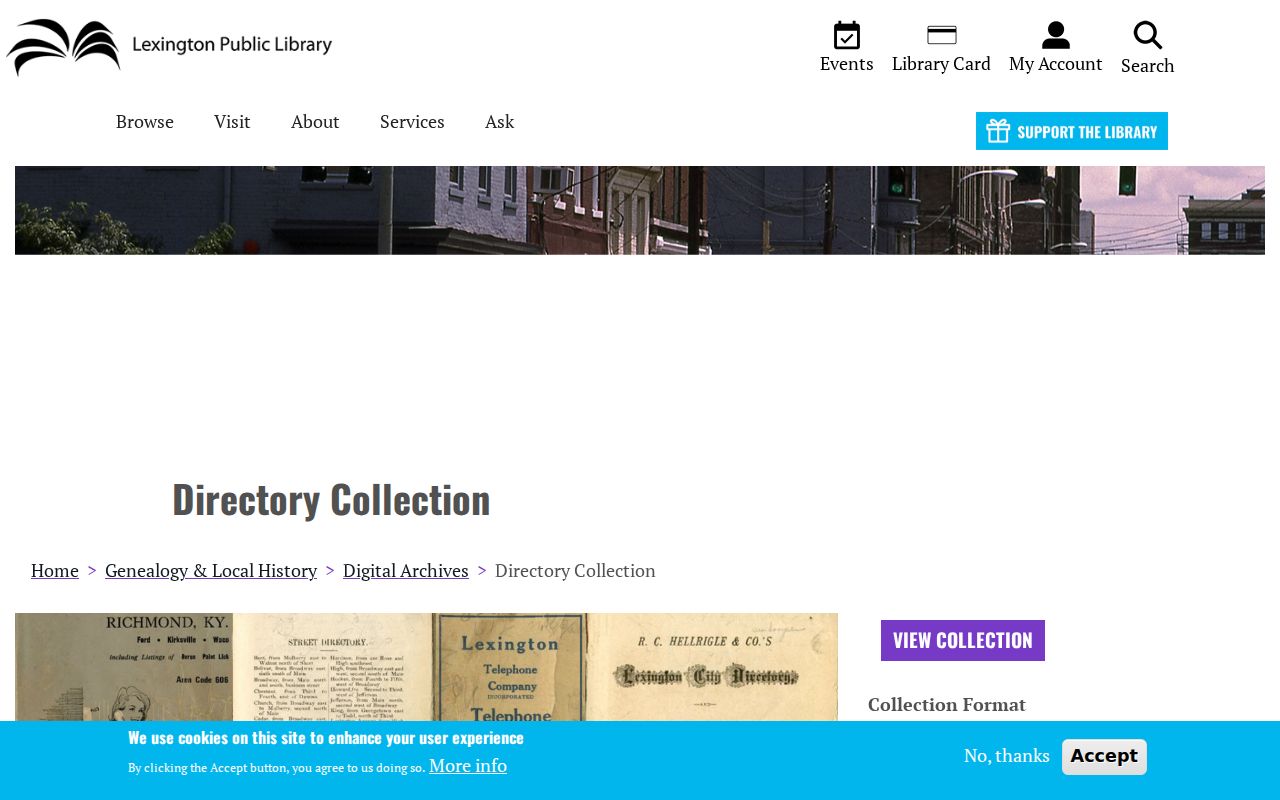
Save the volume title, year, page, and exact printed spelling with each transcription.
Fayette Directory Publishers and Runs
The surviving sequence tracks changes in Fayette County. It begins with city-centered books, adds rural households, and moves through phone, business, street, county, and farm formats. These are not interchangeable sources.
| 1864-65 | Earliest verified digitized Lexington City Directory run. |
|---|---|
| 1877-78 | City Directory and Gazetteer with R.C. Hellrigle metadata. |
| 1912 | Rural Directory extends the search beyond the central grid. |
| 1940-41 | Polk's Lexington joins resident, business, and street clues. |
| 1956-58 | F.O.P. street, subdivision, and county directory material. |
| 1971-77 | Farm and telephone runs form the latest verified sequence. |
Lexington and Fayette County merged governments in 1974. That event explains why older sources may label Lexington and Fayette separately while current records use LFUCG. It does not make either period label wrong.
Decode a Fayette Directory Entry
A real 1906-07 page shows why the image matters. An entry can give a name, middle initial, spouse, occupation or firm, home or boarding mark, and street address. It does not prove land title. The address may mark a home, boarding place, business, or work-linked listing.
| Name | Surname, given name, and middle initial, copied as printed. |
|---|---|
| Spouse | A name in parentheses can separate same-name households. |
| Occupation | A trade, farm, role, or firm can identify the right person. |
| Address mark | h means home; bds or b marks boarding. |
| Historic symbol | An asterisk is period editorial data, not a current identity claim. |
The inspected 1906-07 page preserves the type and entry order.
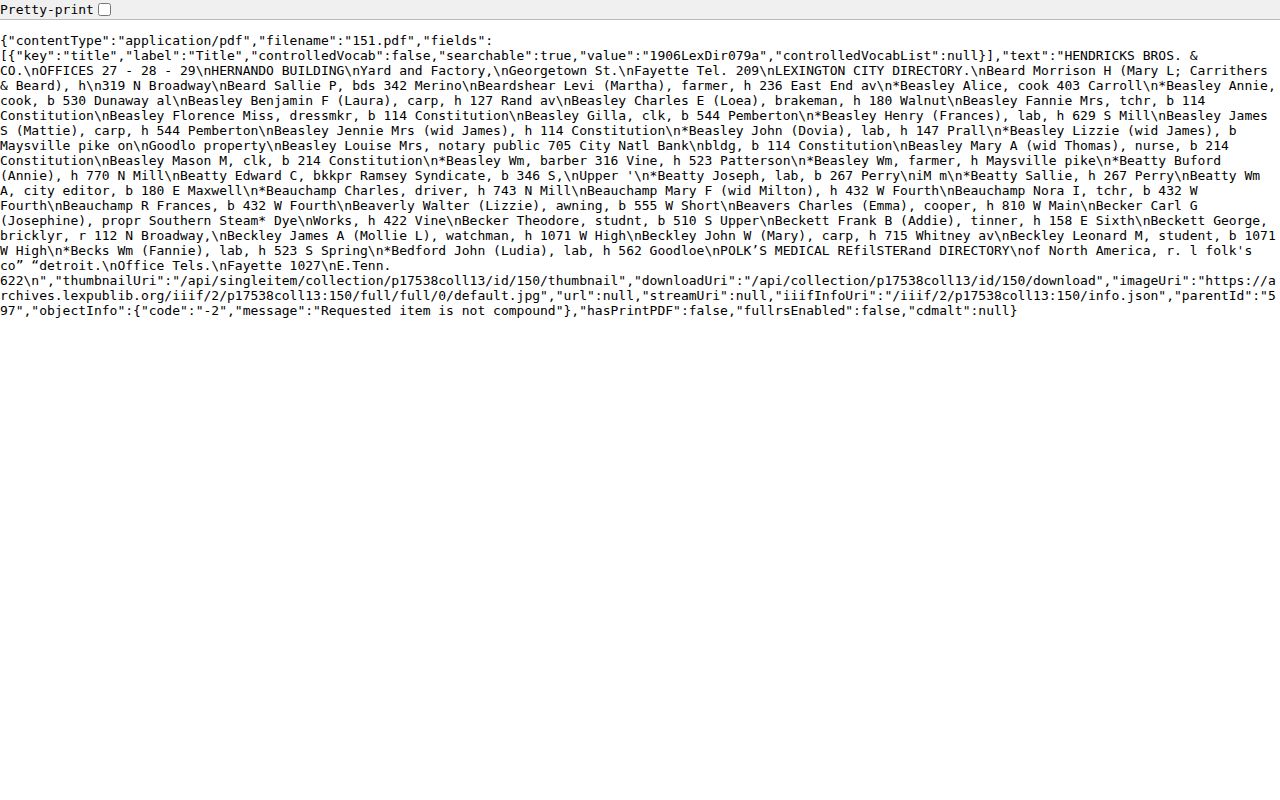
The sample makes the short marks clear and shows why typed text must be checked against the scan.
- Criss-cross directory
- A street-order tool grouping listings by address rather than surname.
- Householder index
- An address-led list of a named householder, not every occupant.
- Abbreviation key
- The volume's guide to short marks, street forms, and listing status.
Fayette Directory Help at LPL
The Kentucky Room at Central Library is the best local fallback when a scan is absent or hard to read. It is strongest for Fayette County. Staff can help locate directories, maps, yearbooks, newspapers, cemetery sources, and subject files. The library is also a FamilySearch affiliate, which can widen access to some digital material while on site.
Remote work should start with a precise citation. The genealogy request form accepts up to four cited Local History Index articles. Free staff help does not include broad lineage work, missing-person searches, or large copying jobs. Supply the name, date, title, page, and known address.
When the search shifts to current ownership, use the Fayette County street directory workflow rather than treating an old listing as a deed.
Trace Fayette Families Across Years
Family history is strongest when a directory sits between records with firm dates. Preserve the print first. Then test spelling variants, nearby years, and the street section. A person who vanishes may have moved, died, stopped subscribing, boarded elsewhere, or simply been left out.
- Copy the full entry, including initials, spouse, work, address, and marks.
- Check the prior and next volumes by surname, then inspect street order.
- Pair 1912 with the 1910 and 1920 census, or later runs with nearby released schedules.
- Use news and obituary indexes to explain a move, marriage, or death.
- Confirm ownership through PVA and deeds, not the city directory alone.
Federal census schedules become public after 72 years. The 1950 census is the latest released decennial schedule as of the research date. A census captures a household on one date. A directory may list just one adult or subscriber.
Fayette Yearbooks and News Clues
Yearbooks and news fill gaps without acting as city directories. The library's Dunbar High run spans 1923 through 1967. Morton and other school sets can place a classmate in one school year, but that does not prove a home address.
The Local History Index covers selected Lexington articles from 1787 through 2007. Herald-Leader text runs from 1983, digital coverage from 2016, and HeritageHub adds obituary searches. Save the paper, date, page, and headline. Cemetery maps cover Fayette and nearby counties. A burial can end a directory trail, though a vital or cemetery record should confirm it.
Rural Fayette Directory Bridges
The 1912 Rural Directory and 1971 Fayette County Farm Directory place farm households that may not fit a downtown book or phone list. Their place labels can differ from today's Lexington mailing line. That makes them a rare bridge between the old city shelf and modern parcel research.
Use a rural entry with the legal description, plat, and deed chain. Modern parcel data can supply the current situs and parcel number. Historic entries may name a farm, stable, university, shop, or firm. Treat the tie as a dated lead, not proof that the work site was the person's home.
Fayette Archives Beyond Directories
The Kentucky Historical Society and Kentucky Department for Libraries and Archives extend the trail when city directory years stop. KHS lists Fayette naturalization petition books from 1892 through 1905. A record may hold residence, birth, arrival, spouse, and children, but the original must be checked.
The Kentucky Historical Society digital collections provide the statewide archival route.

The catalog leads to named record groups, not a promise that every Fayette item has a public scan.
Courthouse disasters occurred in 1803 and 1897. The Clerk's burnt-records and old-book groups are key breadcrumbs, but the disaster list does not prove that a specific book was lost. Ask for the series and locator before concluding that no record survives.
Fayette City Directory Limits
A Fayette County city directory is a dated publication, not a full resident roll. Phone books omit non-subscribers. Business books focus on firms. A boarder mark does not show all household members. Rural families may sit in another run, and scans can be incomplete.
Close the trail with the right custodian. The library supports a printed listing. The census supports a household on its date. The PVA and Clerk support parcel and deed facts. An obituary or vital record supports a death. Results are strongest when dates agree.